

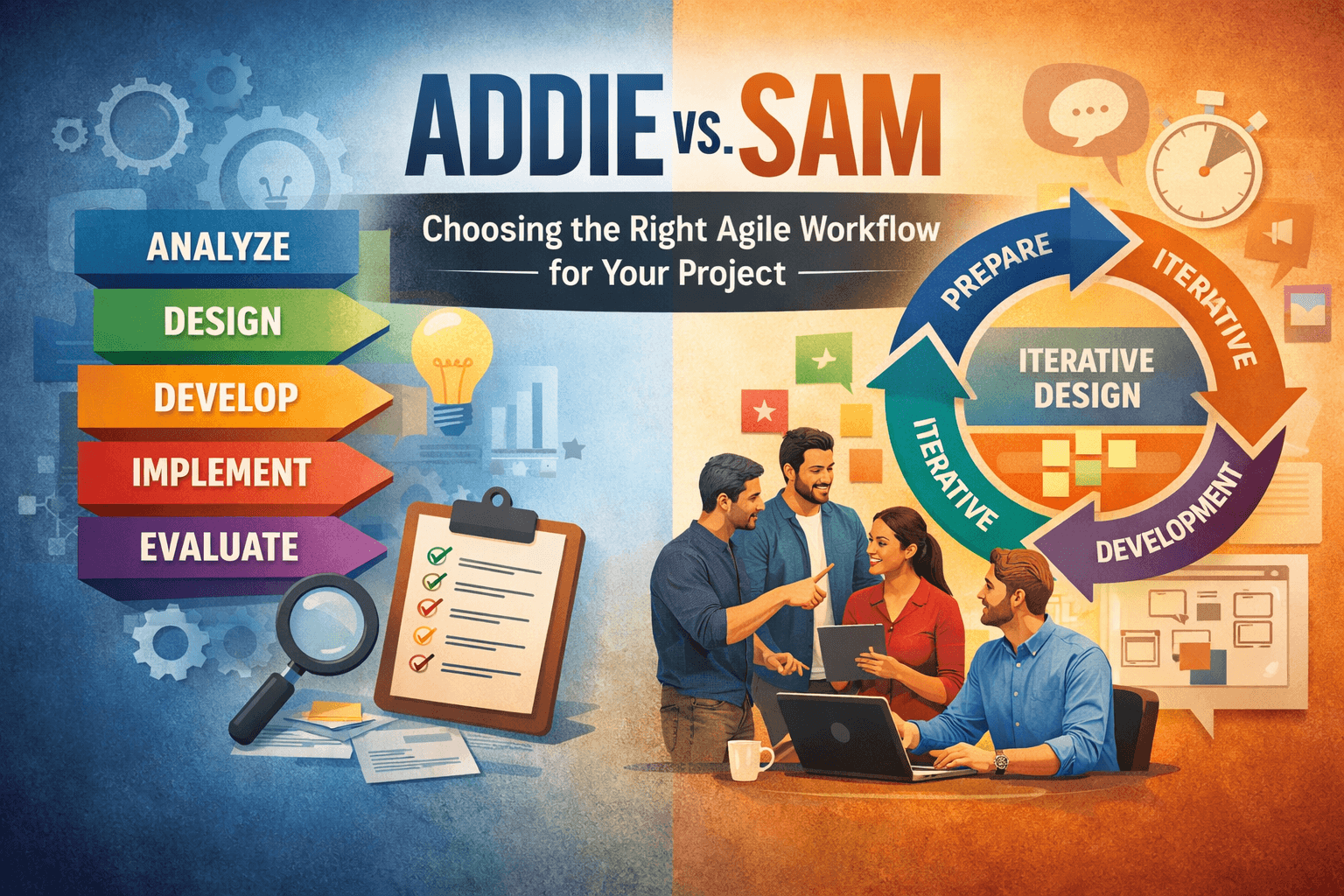
ADDIE vs. SAM Model: Choosing the Right Agile Workflow for Your Project
Every project that involves design, development, or learning strategy needs a workflow a tested method to go from idea to finished output. Two of the most common models are the ADDIE model and the SAM model. While both aim to help you deliver better results, they take very different paths. Traditional ADDIE follows a structured sequence, while SAM embraces agile, iterative cycles that adapt as feedback comes in.
Knowing when and how to use each can save time, reduce rework, and lead to stronger outcomes.
What Is the ADDIE Model?
The ADDIE model is one of the most widely used frameworks in instructional design and project planning. The name comes from its five stages:
-
Analyze – Understand needs, goals, audience, problems, and constraints.
-
Design – Draft plans, storyboards, user flows, and structure.
-
Develop – Build the actual product, learning materials, or deliverables.
-
Implement – Put the solution into action with learners or users.
-
Evaluate – Measure results and refine based on data.
Why ADDIE Still Matters
ADDIE remains popular because it gives teams a methodical, predictable road map especially valuable in complex or regulated environments. The model is thorough, with each phase building toward documented deliverables.
For example, if your team is developing a safety certification course for employees, having clear Analysis documents, design specs, and evaluation metrics helps you prove compliance and show stakeholders exactly how decisions were made.
What Is the SAM Model?
SAM stands for the Successive Approximation Model. It was created as an alternative to traditional design methods like ADDIE, especially when speed and flexibility are important. Rather than moving in a straight line from start to finish, SAM emphasizes rapid iterations, frequent feedback, and evolving prototypes.
The core idea is simple: don’t wait until the end to test whether something works build early, test early, improve fast.
How SAM Works In Plain Terms
Instead of strict phases that happen only once:
-
You quickly sketch an early version or mock-up (even if imperfect).
-
You get feedback from real stakeholders or users.
-
You refine, test, and rebuild.
-
Rinse and repeat until the solution fits the needs of the project.
This makes SAM inherently agile and adaptive.
ADDIE vs. SAM - Side-by-Side
Here’s a practical comparison of how these models differ:
| Feature | ADDIE Model | SAM Model |
|---|---|---|
| Approach | Linear, sequential | Iterative, cyclical |
| Flexibility | Limited mid-project changes | Highly adaptable |
| Feedback Timing | Mostly at the evaluation stage | Continuous throughout |
| Speed | Slower, structured delivery | Faster, phased prototyping |
| Stakeholder Involvement | Occasional, phase-based | Ongoing and frequent |
| Best For | Stable requirements, formal documentation | Evolving requirements, rapid delivery |
When You Should Choose ADDIE
Here are situations where ADDIE shines:
1. Large, Complex Projects
When the stakes are high and the deliverables must be precise, ADDIE’s structure helps you plan thoroughly and minimize risk.
2. Regulatory or Compliance Work
In fields like healthcare, finance, or safety training, thorough documentation and step-by-step rationale are essential.
3. Limited Feedback Loops
If obtaining frequent stakeholder input is unrealistic (for example, executives who only review at major milestones), ADDIE’s scheduled checkpoints work better.
Example in Practice
A government agency developing mandatory training content for legal compliance might choose ADDIE because every decision must be documented and justified. The schedule is longer, but the output is stable and validated.
When You Should Choose SAM
SAM is often the better choice when:
1. Requirements Are Shifting
If you expect changes in scope, audience needs, or content direction, SAM’s iterative loops help you adapt without starting over.
2. You Need Rapid Feedback
If you can involve end users early and often, SAM lets you test assumptions quickly and refine based on real reactions.
3. Time to Market Matters
For projects with short deadlines or frequent updates (like product training or tech onboarding), SAM’s prototyping approach saves time.
Example in Practice
Imagine you’re building a product training module for a software with frequent updates. Instead of waiting until all phases are complete, SAM lets you launch a basic usable version, gather feedback from users, and refine in short cycles.
Real-World Workflow Scenarios
Here are practical, actionable ways to pick between ADDIE and SAM:
Scenario 1: Enterprise LMS Rollout
You have 12 months to deliver a comprehensive course catalog to thousands of employees.
-
Best Model: ADDIE
-
Why: You need documented needs analysis, stakeholder sign-off at key points, and stable objectives.
Scenario 2: Tech Startup Onboarding
You need rapid content for new hires, and product features are evolving monthly.
-
Best Model: SAM
-
Why: Requirements change often, and frequent feedback makes early iterations more valuable than delayed perfection.
Scenario 3: Hybrid Approach
Maybe you start with a structured analysis phase (like ADDIE) to set clear goals. Once research is done, you switch to rapid prototyping cycles (like SAM) for design and build.
This hybrid approach combines the clarity of ADDIE with the flexibility of SAM and many successful teams use both.
Tips for Choosing the Right Workflow
Here are practical tips as you evaluate:
Let Project Risk Drive the Decision
If misunderstanding requirements has big consequences, go with a disciplined ADDIE path. If learning fast matters more than flawless documentation, choose SAM.
Consider Stakeholder Availability
SAM works only if your stakeholders are willing to engage regularly.
Don’t Fear Blending Approaches
You don’t have to pick strictly. Use ADDIE’s phases as guideposts, but cycle through design and prototype iterations like SAM where it adds value.
Common Misconceptions
Is SAM Just “ADDIE with a Twist”?
No while some see similarities (both involve stages like analysis and development), SAM’s heart is iterative learning, not phased hand-offs.
Is ADDIE “Outdated”?
Not at all. Many industries still rely on structured methods, and ADDIE’s discipline is useful where precision and traceability are priorities.
Which Workflow Fits Your Project?
Both ADDIE and SAM are powerful models but they serve different project realities.
👉 Use ADDIE when your goals are clear, documentation and structure matter, and stakeholders review at milestones.
👉 Use SAM when you need agility, quick iterations, and continuous feedback.
Choosing the right workflow means thinking about timelines, risk, team culture, and stakeholder engagement not just what sounds trendy. If you want help mapping your project to the best workflow choice, let’s talk about it